

Patricia Hogan, May 2024 Issue of the Clinton Historical Society Newsletter
The stacks of the Philip E. Munson Library at the Clinton Historical Society safely house three boxes labeled “Women’s Suffrage.” They contain various documents related to the early 20th-century movement in New York State to secure the right of women to participate in local, state, and national elections. In these boxes, you will find flyers, pamphlets, posters, and booklets promoting suffragist and antisuffragist views; newspaper clippings of suffrage-related activities in and around Clinton; papers of movement leaders; and a fascinating assemblage of materials documenting the work of a Clinton organization that helped turn ordinary New York women into full-fledged voting citizens.
In 1910, the Political Equality Club of Clinton joined a network of state, county, and local organizations determined to extend voting rights to women. Clinton’s group—which at first included Mildred Terrett, Harriet Daniels, Mary Hopkins, Janet Daniels, and Delia Avery Williams—initially met on September 18, 1910, at Williams’s home on West Park Row. A year later, the club adopted its constitution and bylaws and expanded its six founding members to a roster of fifty-six, including nine men. The governing documents of the group identified it as “an auxiliary to the New York State Woman’s Suffrage Association,” and declared “the object of this Club is to secure to women the unrestricted exercise of all the rights of citizenship, and equal constitutional rights with men, and equal protection of the law.” The club welcomed “any man or woman over twenty-one years of age” to became a member “upon signing the constitution and paying a membership fee of thirty-five cents.” The Equality Club offered associate membership to individuals who were sympathetic to the cause but unwilling to go on record as supporters. One of the gems of the club’s records is a cloth-bound book containing the handwritten minutes of subsequent meetings—and there were a lot of them.
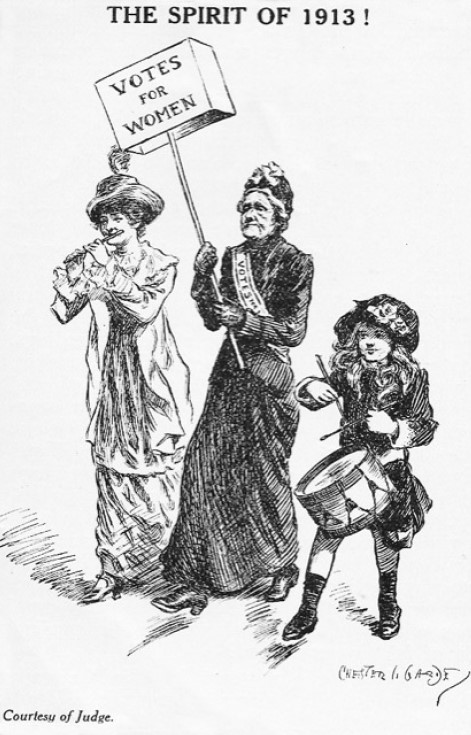
By the time Clinton’s Political Equality Club was founded, the women of New York State had been trying to vote for decades. The 1848 gathering of Elizabeth Cady Stanton, Lucretia Mott, and other women and men in Seneca Falls, New York, is well known. And most students of New York history recall Susan B. Anthony’s arrest in Rochester for voting in the 1872 presidential election. As Susan Goodier and Karen Pastorello noted in their 2017 Women Will Vote: Winning Suffrage in New York State, “Three generations of women fought a complicated, sometimes frustrating, but ultimately rewarding battle to obtain the right to vote.” The Clinton club worked continuously through 1917 when a second statewide referendum finally gave New York women the vote. The struggle for women’s suffrage took so long, in part, because only the men of New York decided such matters.
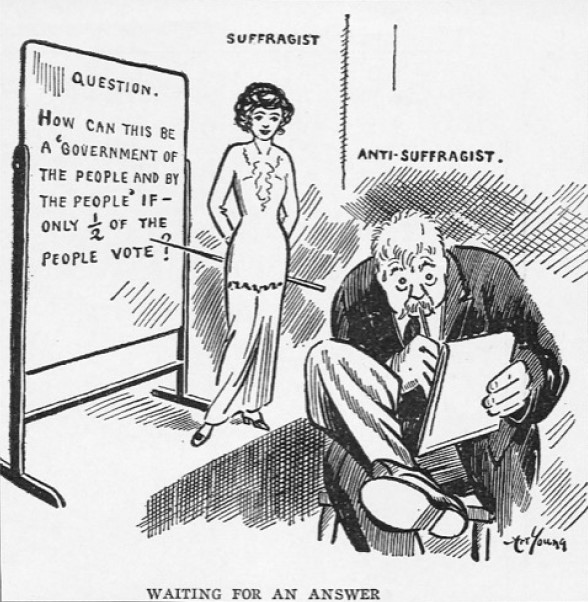
But not just men objected to women having the right to vote. In New York State as elsewhere, many men and women believed that women suffrage would ruin society and the state itself. As antisuffragist Susan Fenimore Cooper (daughter of the Natty Bumppo author) proclaimed, because women were of higher religious and moral quality than men, they should confine their influence to the home and to raising children. Political action and public life, the antisuffragists held, were better suited to men. Antisuffragists in the state organized their ranks into the New York State Association Opposed to Woman Suffrage and allied local groups. They produced publications, broadsides, tracts, and testimonials to promote their arguments for keeping women away from the ballot box. Clinton’s own Elihu Root, former cabinet secretary to two American presidents and active in state politics in the 1910s, opposed votes for women, too. Like Cooper, Root considered women ill-suited for the “struggle, strife, contention, bitterness, heartburning excitement [and] agitation” of politics. The Clinton Political Equality Club and its supporters faced ardent resistance.
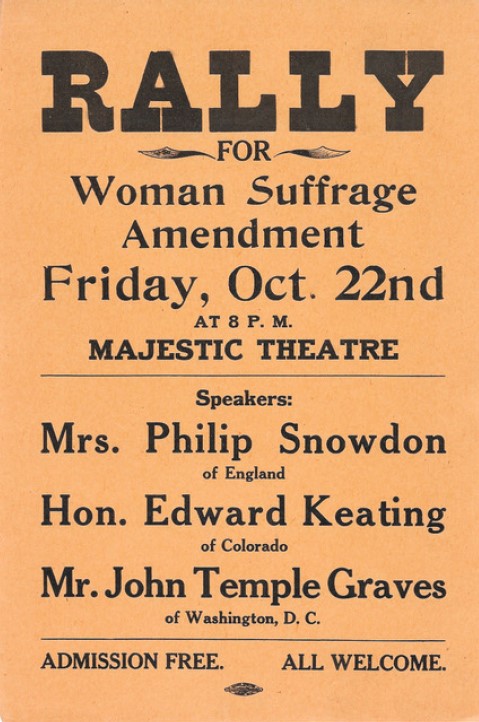
Judging from the number and variety of club activities, though, Clinton’s suffragists embraced the challenge. Club records and newspaper clippings from the Clinton Courier and other papers chronicle gatherings in private homes but also events at the town library, the Baptist church, the village green, and other venues—a measure, perhaps, of community support. The club sponsored a 1911 staging of the British farce How the Vote Was Won at the Scollard Opera House. That same summer, the club hosted a presentation by Harriet May Mills, president of the New York State Suffrage Association. Other state and national speakers also offered public addresses, keeping the cause front-and-center for all Clintonians. Club members organized a reading group studying “the literature of the suffrage movement,” aimed at helping them become knowledgeable about the movement, informed about countering antisuffragists’ arguments, and skilled in the methods of building public support for women’s suffrage. The club sponsored a regular column in the Courier (publisher Henry B. Sykes was an enthusiastic member) called, “Why I Believe in Suffrage,” in which prominent men of the area declared their support. The club also assembled exhibits in one local store and at the library, which included literature it wished to circulate and share with the general public. In the club’s most active years, members attended several state and county suffrage conventions and a Suffrage School of Methods. To support the club’s work, members held bake sales. One, in February 1916, featured a Washington’s Birthday treat called Cherry Sea-Foam Candy. That same year, the club sold a cookbook entitled Choice Recipes Compiled for the Busy Housewife which featured “recipes approved by members of the Clinton Political Equality Club.”
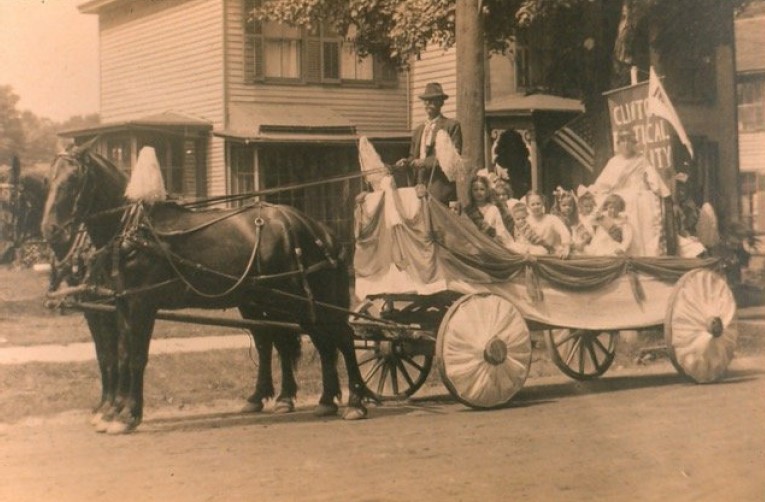
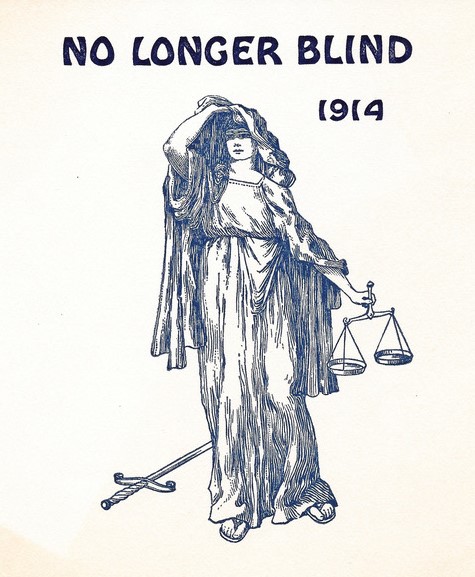
In addition to these activities, club members joined in a statewide effort to garner support for women suffrage. Clinton’s club began in 1914 a canvas of the village to determine the numbers of residents for and against the movement in anticipation of a 1915 referendum on the state ballot. Club members aimed to contact every household in Clinton, and according to the club’s own records, “voters had been thoroughly circularized with literature.” To maintain visibility even as canvassing continued, the club entered a float in Clinton’s Old Home Day Parade in August 1915 featuring a “Goddess of Liberty” and ten children representing the states that had already secured votes for women. It also sponsored a weekly “Suffrage Page” in the Courier. In spite of the movement’s best efforts, the referendum in November failed to pass. Undaunted, Clinton’s suffragists pushed on with preparations for a second statewide referendum scheduled for November 1917.
The United States’ entry into World War I in 1917 may have pressed club members to work harder supporting the Red Cross and selling liberty bonds than concentrating their energies on gaining the vote. The war, in a significant way, however, helped their cause. Movement leaders argued it was hypocritical for Americans to fight a faraway war for democratic principles when half of the country’s own adults were unable to cast ballots. The referendum giving New York women the franchise passed in the November election. The members of Clinton’s Political Equality Club seemed justified to have declared, “We shall be proud some day of any share we have had in the privilege of helping” women secure their voting rights.
Clinton Historical Society’s mission is to collect, preserve, document, research, and interpret the Town of Kirkland and Clinton community’s past for current and future generations. We encourage you to support the Society and enjoy special privileges by becoming a member. Find out more here.